What is a Property Surveyor and Why Do I Need One?
What is a Property Surveyor and Why Do I Need One?
Property Surveyors, sometimes referred to as land Surveyors, play a vital role in the real estate world. They are the professionals who determine or confirm the exact boundaries of a property.
Will you need to deal with a Property Surveyor when selling your home?
You might.
Sometimes the mortgage lender will ask for a land survey, especially if your property is older and hasn’t changed hands in many years. You might also be asked for one by the buyer if there is any confusion about the size and boundaries of your property – or if significant changes have been made to it in recent years.
This is nothing to be concerned about.
A qualified Property Surveyor will do the appropriate inspection and measurements on your property and issue you the survey. (It looks a little like a blueprint.)
Property Surveyors are highly trained and licensed. In the United States, the profession is represented by the National Society of Professional Surveyors, with each state having its own governing body. In Canada, Professional Surveyors Canada (PSC) represents the profession nationally, and most
provinces have their own professional associations.
Before getting a new land survey, make sure you don’t already have one. Hopefully, you’ve stored the paperwork that relates to the purchase of your home. Look through it. A valid land survey might be right there.
If you have questions about land surveys, call me today.
How to Watch Out for Poisons in Your Home
How to Watch Out for Poisons in Your Home
According to the Centers for Disease Control and Prevention (CDC), 90% of exposures to poisons occur inside the home. Almost all are preventable, if you follow some simple guidelines.
• Look for the poison label on products you buy. Visually, it’s a skull and crossbones, often (but not always) with the word POISON above it.
• Don’t make assumptions. Sometimes a seemingly innocuous product, like a shampoo, can contain poison or other ingredients which are harmful if swallowed.
• Avoid mixing different cleaning products together. When chemicals are combined, they change. Combining some cleaning products can even create toxic fumes.
• Keep all medication, even the non-prescription kind, out of reach of children. Never leave medicine on the bathroom counter.
• Never use pesticides inside the home unless the product is clearly labeled for indoor use. Then, use only as directed.
• Never use a charcoal grill or barbeque indoors, no matter how well ventilated you think you’ve made it. Doing so can easily cause carbon monoxide poisoning.
One final tip. Pay attention to the expiry date of products, especially cosmetics and cleaning liquids. As chemicals age, they change and can emit harmful fumes.
November Market Report from the REBGV
December 2, 2016
Home sales and listings just below 10-year average
Home buyer and seller activity remains near historical averages in the Metro Vancouver housing market.
Residential home sales in the region totalled 2,214 in November 2016, a decrease of 0.9 per cent from the 2,233 sales recorded in October 2016 and a decrease of 37.2 per cent compared to November 2015 when 3,524 homes sold.
Last month’s sales were 7.6 per cent below the 10-year sales average for the month.
“While 2016 has been anything but a normal year for the Metro Vancouver housing market, supply and demand totals have returned to more historically normal levels over the last few months,” said Dan Morrison, Real Estate Board of Greater Vancouver (REBGV) president.
New listings for detached, attached and apartment properties in Metro Vancouver totalled 3,147 in November 2016. This represents a decrease of 20.9 per cent compared to the 3,981 units listed in October 2016 and a 7.2 per cent decrease compared to November 2015 when 3,392 properties were listed.
Last month’s new listing count was 1.2 per cent below the region’s 10-year new listing average for the month.
The total number of properties currently listed for sale on the MLS® system in Metro Vancouver is 8,385, an 8.3 per cent decrease compared to October 2016 (9,143) and a 3.6 per cent increase compared to November 2015 (8,096).
The sales-to-active listings ratio for November 2016 is 26.4 per cent. This is up two per cent from last month (24.4 per cent).
Downward pressure on home prices can occur when the ratio dips below the 12 per cent mark for a sustained period, while home prices can experience upward pressure when it surpasses 20 per cent over several months.
“Demand, relative to supply, for detached homes is lower right now than demand for townhomes and apartments,” Morrison said. “This is causing prices to remain stable, or flat, for townhomes and apartments, while detached homes are seeing modest month-over-moth declines.”
The MLS® Home Price Index composite benchmark price for all residential properties in Metro Vancouver is currently $908,300. This represents a 1.2 per cent decrease compared to last month and a 20.5 per cent increase compared to November 2015.
Sales of detached properties in November 2016 reached 638, a decrease of 2.1 per cent from the 652 detached sales recorded in October 2016 and a 52.2 per cent decline over November 2015. The benchmark price for detached properties is $1,511,100. This represents a 2.2 per cent decline compared to last month and a 23 per cent increase compared to November 2015.
Sales of apartment properties reached 1,200 in November 2016, an increase of 1.9 per cent compared to the 1,178 sales in October 2016 and a 22.7 per cent decrease compared to November 2015.The benchmark price of an apartment property is $512,100. This is unchanged from last month and is an 18 per cent increase compared to November 2015.
Attached property sales in November 2016 totalled 376, a decrease of 6.7 per cent compared to the 403 sales in October 2016 and a 40.9 per cent decline compared to November 2015. The benchmark price of an attached unit is $667,100. This represents a 0.3 per cent decrease compared to last month and a 23 per cent increase compared to November 2015.
Create a New Pantry, When You Don’t Already Have One!
Creating a Pantry, When You Don’t Have One!
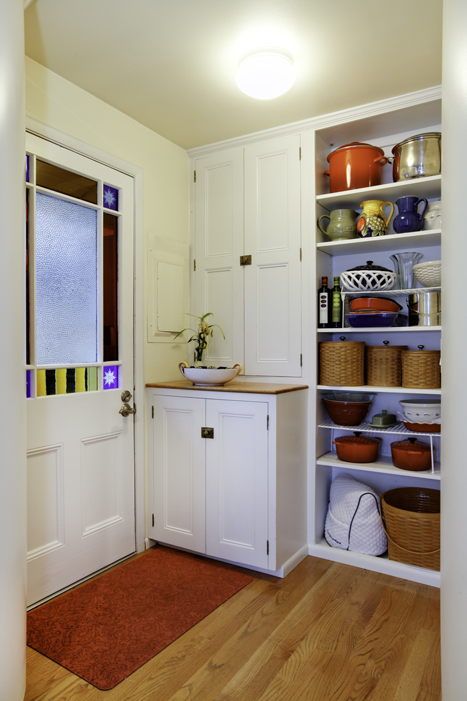
A pantry is the ideal nook for storing extra food and other items ordinarily crammed into the kitchen. It’s also a nice design feature, as it harkens back to the days of country kitchens with spacious pantries.
That’s okay. These days, there are many ways to create a pantry in your home – even if it doesn’t have one! Here are just a few suggestions:
Add shelves to the laundry room. If you have the space, this is the ideal place to create a mini-pantry.
Purchase a portable pantry. There are many available on the market. Some are even disguised as cabinets you’d expect to see in living and dining rooms.
Purchase a movable pantry. These units are on wheels and can slide in and out of the kitchen with ease. Some are short enough to slide conveniently under a kitchen table.
Make use of an unused closet. These are rare in most homes, but if you have a closet that isn’t being used, it can easily be converted into a pantry.
As you can see, there are plenty of options available. You don’t necessarily need to build an extra room!
October Real Estate Statistics from the REBGV
November 2, 2016
Home sale and listing activity dip below historical averages in October
Reduced home sale and listing activity are changing market dynamics in communities across Metro Vancouver*.
Residential property sales in the region totalled 2,233 in October 2016, a 38.8 per cent decrease from the 3,646 sales recorded in October 2015 and a 0.9 per cent decrease compared to September 2016 when 2,253 homes sold.
Last month’s sales were 15 per cent below the 10-year October sales average.
“Changing market conditions compounded by a series of government interventions this year have put home buyers and sellers in a holding pattern,” Dan Morrison, Real Estate Board of Greater Vancouver (REBGV) president said. “Potential buyers and sellers are taking a wait-and-see approach to try and better understand what these changes mean for them.”
New listings for detached, attached and apartment properties in Metro Vancouver totalled 3,981 in October 2016. This represents a decrease of 3.5 per cent compared to the 4,126 units listed in October 2015 and a 17 per cent decrease compared to September 2016 when 4,799 properties were listed.
Last month’s new listing count was 9.5 per cent below the region’s 10-year new listing average for the month.
The total number of properties currently listed for sale on the MLS® system in Metro Vancouver is 9,143, a 4.5 per cent decrease compared to October 2015 (9,569) and a 2.3 per cent decrease compared to September 2016 (9,354).
The sales-to-active listings ratio for October 2016 is 24.4 per cent. Generally, analysts say that downward pressure on home prices occurs when the ratio dips below the 12 per cent mark for a sustained period, while home prices often experience upward pressure when it surpasses 20 per cent over several months.
“While sales are down across the different property types, it’s the detached market that’s seen the largest reduction in home buyer demand in recent months,” Morrison said. “It’s important to work with your local REALTOR® to help you navigate today’s changing trends.”
The MLS® Home Price Index composite benchmark price for all residential properties in Metro Vancouver is currently $919,300. This represents a 24.8 per cent increase compared to October 2015 and a 0.8 per cent decline compared to September 2016.
Sales of detached properties in October 2016 reached 652, a decrease of 54.6 per cent from the 1,437 detached sales recorded in October 2015. The benchmark price for detached properties is $1,545,800. This represents a 28.9 per cent increase compared to October 2015 and a 1.4 per cent decrease compared to September 2016.
Sales of apartment properties reached 1,178 in October 2016, a decrease of 23.7 per cent compared to the 1,543 sales in October 2015.The benchmark price of an apartment property is $512,300. This represents a 20.5 per cent increase compared to October 2015 and a 0.3 per cent increase compared to September 2016.
Attached property sales in October 2016 totalled 403, a decrease of 39.5 per cent compared to the 666 sales in October 2015. The benchmark price of an attached unit is $669,200. This represents a 25.7 per cent increase compared to October 2015 and a 1.1 per cent decrease compared to September 2016.
No matter how much you love your current property, you may be dreaming of the day you can buy up into a better home in a better neighbourhood.
Is that day today, or, is it a few years down the road? Here’s a quick way to make that assessment.
First, make a list of all the practical reasons why it might be time to move up. Those reasons might include features such as: more bedrooms, proximity to work and school, a larger backyard with trees, nearby parks and walking paths and better access to things you enjoy like theatre.
Next, make a list of the emotional reasons for making such a move. Those reasons might include memorable get-togethers with friends on a more spacious deck, an easier and less stressful commute to work, more family time with the kids and enjoyable Saturday golf at a nearby course.
Finally, take a financial snapshot to determine if you can afford to move up. You’ll need to get a good idea of what your current property will sell for in today’s market, average price of homes in your desired neighbourhood, and how much mortgage you’ll need.
Once you have all that down on paper, you’ll have a clear picture of your readiness. If the practical and emotional reasons for buying up are compelling, and you can afford to make the move, then you have your answer.
The time is now!
By the way, if you need help in making this determination – especially figuring out what your home will likely sell for, call me today.
Should You Worry About Moisture on Windows?
Should You Worry About Moisture on Windows?
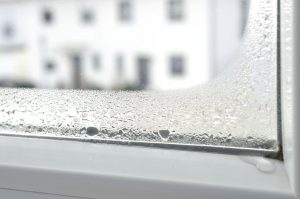
You’re standing by your window admiring the view. Then you notice it. Moisture has built-up around the edges of the glass. Should you worry?
It all depends on the reason for the build up. Assuming you have traditional double-pane glass in your windows, there are a few things to look for if you notice moisture. Often, moisture at the bottom of the windows is simply caused by too much humidity in your indoor air. If that’s the case, simply adjust your humidifier.
If the moisture is on the exterior of the window, typically there’s also no problem with the window itself. It may have rained recently or the outside humidity may have spiked causing the accumulation. Generally, there’s no reason for concern. However, if the moisture is in between the two panes of glass, the seal has broken and surrounding air – along with its water content – has made its way in. This disrupts the thermal barrier of the window, reducing its energy efficiency. In fact, the glass might feel noticeably colder than your other windows on chilly days. In that case, you’ll need to replace the pane. Similarly, if the moisture is coming in through only one spot — the bottom right corner, for example — then you might have a leak. If you have a wood frame or sill, you may also notice a growing water stain. It’s important to get leaks fixed quickly. There may be water damage occurring within the frame that you cannot see.
Home sales remain at record levels across Metro Vancouver
Home sales remain at record levels across Metro Vancouver
Last month was the highest selling April on record for Metro Vancouver.
Residential property sales in the region totalled 4,781 in April 2016, an increase of 14.4 per cent from the 4,179 sales recorded in April 2015 and a decrease of 7.6 per cent compared to March 2016 when 5,173 homes sold.
April sales were 41.7 per cent above the 10-year sales average for the month.
“Home buyer competition remains intense across the region,” Dan Morrison, REBGV president said. “Whether you’re a home buyer or seller, it’s important to work with your local REALTOR® to get the information you need and to develop a strategy that will help you navigate today’s market.”
New listings for detached, attached and apartment properties in Metro Vancouver totalled 6,127 in April 2016. This represents an increase of 3.9 per cent compared to the 5,897 units listed in April 2015 and a 2.4 per cent decline compared to March 2016 when 6,278 properties were listed.
“While we’re seeing more homes listed for sale in recent months, supply is still chasing this unprecedented surge of demand in our marketplace,” Morrison said.
The total number of properties currently listed for sale on the MLS® system in Metro Vancouver is 7,550, a 39.3 per cent decline compared to April 2015 (12,436) and a 2.6 per cent increase compared to March 2016 (7,358).
The sales-to-active listings ratio for April 2016 is 63.3 per cent. This is indicative of a seller’s market.
Generally, analysts say that downward pressure on home prices occurs when the ratio dips below the 12 per cent mark, while home prices often experience upward pressure when it reaches the 20 to 22 per cent range in a particular community for a sustained period of time.
The MLS® Home Price Index composite benchmark price for all residential properties in Metro Vancouver is currently $844,800. This represents a 25.3 per cent increase compared to April 2015.
Sales of detached properties in April 2016 reached 1,979, an increase of 9 per cent from the 1,815 detached sales recorded in April 2015. The benchmark price for detached properties increased 30.1 per cent from April 2015 to $1,403,200.
Sales of apartment properties reached 2,107 in April 2016, an increase of 33.4 per cent compared to the 1,579 sales in April 2015.The benchmark price of an apartment property increased 20.6 per cent from April 2015 to $475,000.
Attached property sales in April 2016 totalled 695, a decrease of 11.5 per cent compared to the 785 sales in April 2015. The benchmark price of an attached unit increased 22.1 per cent from April 2015 to $608,600.
Also, if you are interested in buying and selling hot real estate properties or wish to know it all – from listings, market updates, local information and more, choose the most experienced real estate agent in North Vancouver – Claudio Tonella, today!
REBGV-Stats-Package-for-Media
REBGV-Stats-Package-for-Media
“Home sales are more than one-third above what’s typical for this time of year yet the supply of homes for sale is the lowest we’ve seen in five years,” Darcy McLeod, REBGV president said. “This activity has created favourable market conditions for anyone considering selling their home today.”
“Housing market activity comes in cycles; we’re in an up cycle right now that looks similar to the mid 2000s,” McLeod said. “It would be easy to point to one factor that’s causing this cycle, but the truth is that it’s a number of different factors…”June 2015 Stats Package_0

 Property Surveyors, sometimes referred to as land Surveyors, play a vital role in the real estate world. They are the professionals who determine or confirm the exact boundaries of a property.


 Creating a Pantry, When You Don’t Have One!

 You’re standing by your window admiring the view. Then you notice it. Moisture has built-up around the edges of the glass. Should you worry?