Balancing the Emotional and Practical Sides of Buying a Home
Balancing the Emotional and Practical Sides of Buying a Home
Imagine this scenario…
You’re shopping for a new home. You drive to visit a recent listing. As you walk through the front doors, you’re impressed. Every room looks fantastic. You see yourself relaxing on the spacious patio, cooking in the modern kitchen, and enjoying evenings with the family in the cozy living room.
Your emotions are on overdrive. This is your dream home!
Should you make an offer? Probably. In fact, you should make that decision quickly in case there are other interested buyers. However, your decision shouldn’t be guided purely by emotion. You want to make sure you take practical matters into consideration too.
For example, you’ll want to consider:
Is the property within your price range?
Does it have everything you need?
Do you like the neighbourhood?
How old is the property?
Are there items, such as the furnace, that may need to be replaced soon?
Will it need any major repairs or upgrades?
What are the average monthly costs of carrying the home? (Property taxes, utilities, etc.)
Once you’ve considered the purchase of the home from a practical standpoint, you’ll have a lot more confidence in your decision when you make an offer.
Need help? Give me a call and we can start discussing your dream home and what to look for.
Setting Your List Price Requires Calculation and Savvy
Setting Your List Price Requires Calculation and Savvy
When you’re having a garage sale, one of the toughest tasks is pricing your items. If you put a price tag on your old golf clubs that’s too high, no one will buy them. If you make the price too low, they might sell quickly, but you’ll spend the rest of the day wondering if you could have gotten more!
It’s similar to selling your home — except with your home, the stakes are much higher. You want to price your property to sell, but you don’t want to leave any money on the table.
How do you accomplish that?
Setting the right list price for your home requires a combination of skilled calculation and industry savvy.
Let’s start with the “calculation” part…
When you work with me, I’ll review recently sold properties that are similar to yours in type, size, features and location. Then, using that data, we’ll calculate a range that represents your property’s “current market value.”
For example, consider a spacious 15-year-old bungalow in a nice neighbourhood. If similar homes in the area have sold for $475,000- $550,000 in the last six months, then it’s obvious that your home should sell in that range too. A list price above or below that range would be in the danger zone.
But skilled calculation is only half the task.
Setting your list price also requires expertise in the local market, combined with good old-fashioned gut instinct. That instinct comes from being on the front lines of many property transactions.
That’s why working with a good real estate salesperson is so important, when you’re deciding on the list price for your home.
Want to discuss selling your home? Call me and we can get started.
How to Boost Your Home’s Curb Appeal
How to Boost Your Home’s Curb Appeal
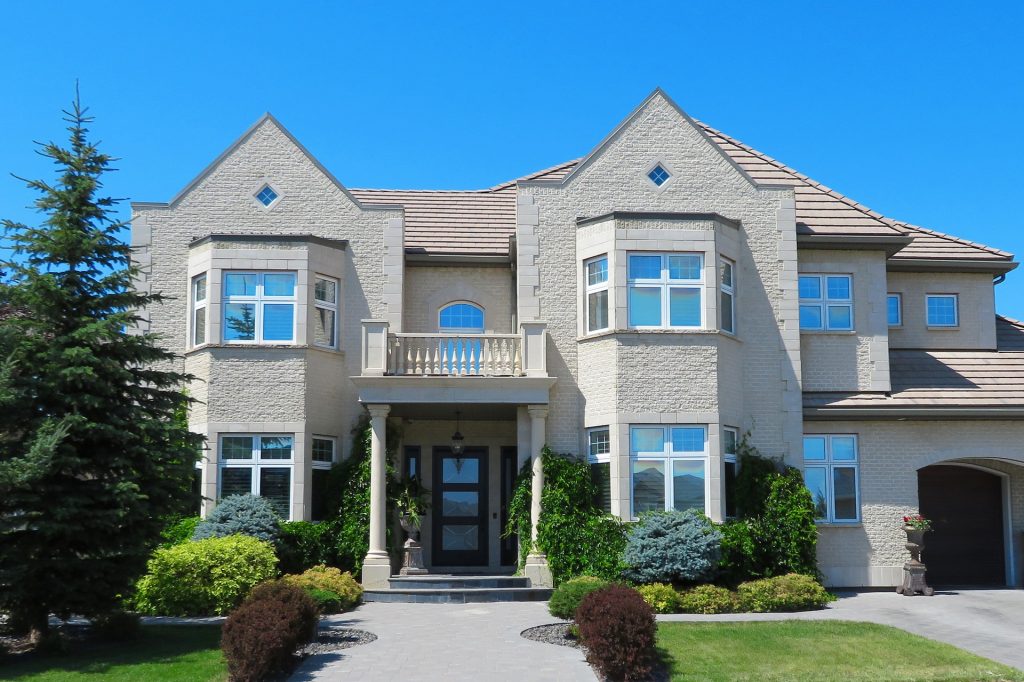
Ideally, you would like buyers to wait until they’ve viewed your whole property before they judge it. However, the reality is, buyers start forming an impression of your home as soon as they see it from the curb. So, it pays to do everything you can to improve your property’s “curb appeal“.
Here are some ideas on how to Boost Your Home’s Curb Appeal:
You can improve the impact of your landscaping by trimming hedges, removing any unsightly weeds, and cutting the grass. Planting just a few fresh flowers can make a big impact, even in the colder months.
If your main entrance door is old, a fresh coat of paint will make it look like new. In some cases, the effect is significant.
Remove any items that might distract the buyer from forming a good first impression. For example, garbage cans, stored items along the side of the property, etc.
Make sure the curtains and blinds on your front windows are open during viewings. That will make your home look more friendly and appealing.
If your driveway has grease stains and other blemishes, consider renting a power washer and giving the driveway a thorough cleaning.
Clean your front windows. If possible, also clean the exterior panes.
Finally, if possible, park your vehicles on the street and away from your home. Doing this will not only make your home look more inviting to buyers, it will give them a convenient place to park.
Most of these tips can be done in less than a day. Yet, they can make a big difference in your home’s curb appeal. They are worth the effort! Let me know if you need to be put in touch with some local professionals.
Creating the Ideal Working Relationship with Your Agent
Creating the Ideal Working Relationship
with Your Agent
If you’re working with a landscaping contractor, you want to develop a good working relationship with that professional, so you can avoid delays, stress and other issues. After all, the last thing you want is a tree planted in the wrong spot because of a misunderstanding!
The same holds true when working with a real estate agent. Whether you’re buying, selling, or both, you want the process to go smoothly and successfully. Creating an ideal working relationship with your agent is an important step toward making that happen.
How do you do that?
First, ask your agent to go over the process with you. If you’re selling your home, you want to understand the steps the agent is going to take. That way, there will be fewer surprises. In particular, you’ll want to discuss how viewings will be handled. You’ll need to come to an agreement as to when your home will be available for viewings, how short-notice viewings will be handled, and whether or not “lockbox access” will be needed.
Don’t be afraid to ask questions, even if you’re worried about seeming to be naive. (You won’t!) You don’t want to have unanswered questions or concerns between you and your agent.
Also, know that misunderstandings and mistakes can happen in any relationship with a professional. So if an issue comes up, discuss it right away. Don’t let it fester.
Finally, remember that your agent should be a professional like me, with expertise in buying and selling in this market. When I make a recommendation regarding pricing, prepping your home, viewings, etc. remember that I am working in your best interest. I want to sell your property, quickly and for a good price, just as much as you do!
More supply less demand across Metro Vancouver housing market
More supply and less demand seen across Metro Vancouver housing market
The supply of homes for sale continued to increase across the Metro Vancouver* housing market in September while home buyer demand remained below typical levels for this time of year.
The Real Estate Board of Greater Vancouver (REBGV) reports that residential property sales in the region totalled 1,595 in September 2018, a 43.5 per cent decrease from the 2,821 sales recorded in September 2017, and a 17.3 per cent decrease compared to August 2018 when 1,929 homes sold.
Last month’s sales were 36.1 per cent below the 10-year September sales average.
“Fewer home sales are allowing listings to accumulate and prices to ease across the Metro Vancouver housing market,” Ashley Smith, REBGV president-elect said. “There’s more selection for home buyers to choose from today. Since spring, home listing totals have risen to levels we haven’t seen in our market in four years.”
There were 5,279 detached, attached and apartment properties newly listed for sale on the Multiple Listing Service® (MLS®) in Metro Vancouver in September 2018. This represents a 1.8 per cent decrease compared to the 5,375 homes listed in September 2017 and a 36 per cent increase compared to August 2018 when 3,881 homes were listed.
The total number of properties currently listed for sale on the MLS® system in Metro Vancouver is 13,084, a 38.2 per cent increase compared to September 2017 (9,466) and a 10.7 per cent increase compared to August 2018 (11,824).
For all property types, the sales-to-active listings ratio for September 2018 is 12.2 per cent. By property type, the ratio is 7.8 per cent for detached homes, 14 per cent for townhomes, and 17.6 per cent for condominiums.
Generally, analysts say that downward pressure on home prices occurs when the ratio dips below the 12 per cent mark for a sustained period, while home prices often experience upward pressure when it surpasses 20 per cent over several months.
“Metro Vancouver’s housing market has changed pace compared to the last few years. Our townhome and apartment markets are sitting in balanced market territory and our detached home market remains in a clear buyers’ market,” Smith said. “It’s important for both home buyers and sellers to work with their Realtor to understand what these trends means to them.”
The MLS® Home Price Index composite benchmark price for all residential properties in Metro Vancouver is currently $1,070,600. This represents a 2.2 per cent increase over September 2017 and a 3.1 per cent decrease over the last three months.
Sales of detached properties in September 2018 reached 508, a 40.4 per cent decrease from the 852 detached sales recorded in September 2017. The benchmark price for detached properties is $1,540,900. This represents a 4.5 per cent decrease from September 2017 and a 3.4 per cent decrease over the last three months.
Sales of apartment properties reached 812 in September 2018, a 44 per cent decrease compared to the 1,451 sales in September 2017. The benchmark price of an apartment property is $687,300. This represents a 7.4 per cent increase from September 2017 and a 3.1 per cent decrease over the last three months.
Attached property sales in September 2018 totalled 275, a 46.9 per cent decrease compared to the 518 sales in September 2017. The benchmark price of an attached unit is $837,600. This represents a 6.4 per cent increase from September 2017 and a two per cent decrease over the last three months.
Lowering Shipping Fees When Shopping Online
Lowering Shipping Fees When Shopping Online
Online shopping is growing by an average of 20 million new shoppers each year. That’s a lot of people clicking and buying! You may be one of them.
However, there’s a cost to online shopping that’s all too easy to overlook. Shipping fees. Imagine saving $10 on a luxury cookware set, only to be hit with a $15 delivery charge. Ouch.
So how do you avoid those fees?
First of all, always check the fine print on the checkout screen. Notice what the shipping cost (if any) will be before you click the final purchase button. Keep in mind that the base shipping fee shown may update — and become higher — once you’ve typed in your address.
Some e-tailers offer free delivery for orders over a certain threshold amount; for example, $50. If there’s more you can add to an order to get the shipping fee waived, it may be worth it.
There are a few e-tailers, most notably Amazon, that offer yearly memberships where one of the benefits is free delivery on all orders. Those kinds of memberships may be worth checking out if you do a lot of online shopping with a particular company.
A final tip:
Always check for multiple delivery options. Some e-tailers, list an express shipping charge as the default option on the check-out screen, but have a free standard delivery option if you choose it.
Takeaway:
Shipping fees take the fun out of online shopping. Do what you can to reduce or eliminate them!
Four Things You Should Know About Staging
Four Things You Should Know About Staging
You’ve probably heard about “home staging”. As the name implies, it’s all about arranging each room in your home in a way that will make the best impression on buyers. Here’s what you need to know about staging if you’re thinking of listing your property.
1. Staging can get you a higher price.
On average, a fully-staged home tends to sell for 17% more than an unstaged home of the same type in the same local market.
Depending on the current market value of your property, doing some staging in your home could put thousands of extra dollars in your pocket, post-sale.
2. It can speed up the sale.
A study by the Real Estate Staging Association (RESA) showed that fully- staged homes spend an average of 90% less time on the market. So, if you need to sell quickly – without dropping your price – or you just want the comfort of having offers come in sooner, staging will definitely help.
3. You don’t have to go crazy.
Completely staging every room in your home is going to give you the full benefits of this strategy. However, you don’t have to go that far. In fact, just implementing a few simple staging techniques to some key rooms can make a big difference.
4. Get professional help or advice.
When it comes to home staging, don’t guess at it. Get professional help or advice. As a REALTOR®, I have a lot of expertise in this area and often provide clients with proven, do-it-yourself staging tips and suggestions. If necessary, I can also recommend a professional stager. Please feel free to contact me anytime.
CRA Rules and Taxes
CRA Rules and Taxes
Did you know?
Most Canadians pay their fair share of taxes, says CRA, but the agency has detected some who are avoiding paying taxes related to real estate transactions.
According to CRA audits over the last three years, there have been “additional taxes related to the real estate sector,” to the tune of $592.6 million.
The agency says “buying a first home represents a great accomplishment” but that it’s committed to “taking concrete action against those who break the rules.”
QUICK TAX FACTS
Builders of new and substantially renovated residences or rental properties are required to collect and remit the GST/HST to CRA when they sell, rent out for the first time or appropriate the property for personal use. Additionally, purchasers of new residences must follow the rules when applying for new housing rebates.
Property flipping is not illegal, so Canadians have the right to purchase and sell property for a profit. However, the income resulting from these transactions is considered business income and must be reported.
If you have any questions about how the CRA rules affect the buying or selling of your home, give me a call and we can discuss the regulations.
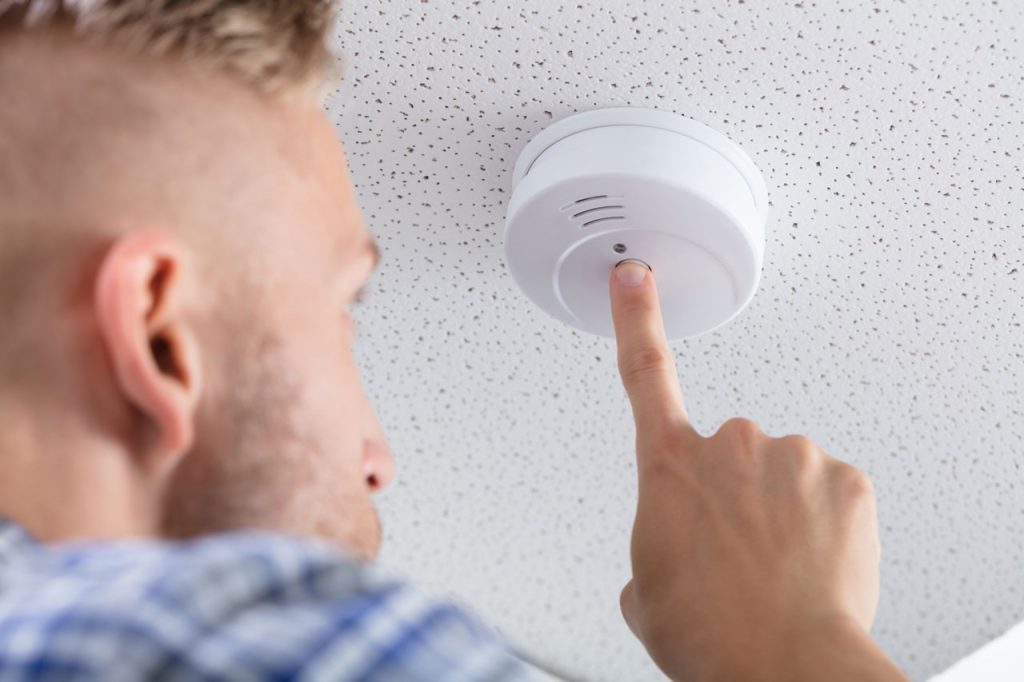
Carbon Monoxide (CO) is invisible and odourless, so you can’t actually “watch out for it”. However, you should monitor for it because an excessive build-up of this gas in your home can be deadly.
Fortunately, there are many types of Carbon Monoxide detectors you can purchase — and most are effective and affordable. Some models simply plug into an outlet. (Many also have a battery backup.)
Carbon Monoxide is caused by the incomplete burning of fuel. It can be released by a faulty gas furnace, kerosene heaters, and gas fireplaces. That’s why it’s a good idea to install detectors in areas close to these fixtures, as well as near bedrooms.
Experts say you should always follow manufacturer’s instructions when installing CO detectors and test them regularly. You want to make sure you can hear the alarm from your bedroom.
CO build-up in homes is rare. So your detectors may never go off. But, if the alarm does sound, get everyone (including pets) out of the home and into the fresh air. Then call 911. Typically, the fire department will do an inspection and determine the source of the carbon monoxide.
A final tip: Never use your BBQ or outside grill in the garage or, especially, anywhere inside your home. The risk of CO exposure is very high and definitely not worth the convenience of a grilled burger!
If you want to discuss ways to make your home even safer, give me a call and we can chat!
What Type of New Home Are You Qualified to Buy?
What Type of New Home Are You Qualified to Buy?
When you think about looking for a new home, one of the first questions that probably comes to mind is: “What type of property can I afford?” That’s an important question because your price range is a major determining factor in the types and sizes of homes you should be viewing.
You don’t want to waste time looking at properties that are beyond your price range. At the same time, you don’t want to purchase a less-than-ideal home, only to realize later on that you could have afforded more.
So how do you determine what type of new home you are qualified to purchase?
The first step is to find out what your current property would likely sell for in today’s market. I make that calculation for clients all the time. It involves reviewing what homes similar to yours have sold for recently, as well as other data — such as special features your home may have that are likely to boost the selling price.
Once you know the current market value of your home, subtract any outstanding mortgages and estimated selling expenses, and you’ll end up with an amount that can be applied to the purchase of your next home. (You may also have other funds you want to use.)
The next step is to talk to a lender or mortgage broker to see how much of a new mortgage you qualify for. (Call me if you need a recommendation.) It’s important to get a Pre-Qualification or Pre-Approval. That makes the offer you make on a new home more credible.
If you want to find out the types and sizes of homes you can get into, give me a call. I’d be happy to show you the possibilities!


 When you’re having a garage sale, one of the toughest tasks is pricing your items. If you put a price tag on your old golf clubs that’s too high, no one will buy them. If you make the price too low, they might sell quickly, but you’ll spend the rest of the day wondering if you could have gotten more!



 Did you know?