Bathroom Staging Tips from Professional Home Stagers
Bathroom Staging Tips from Professional Home Stagers
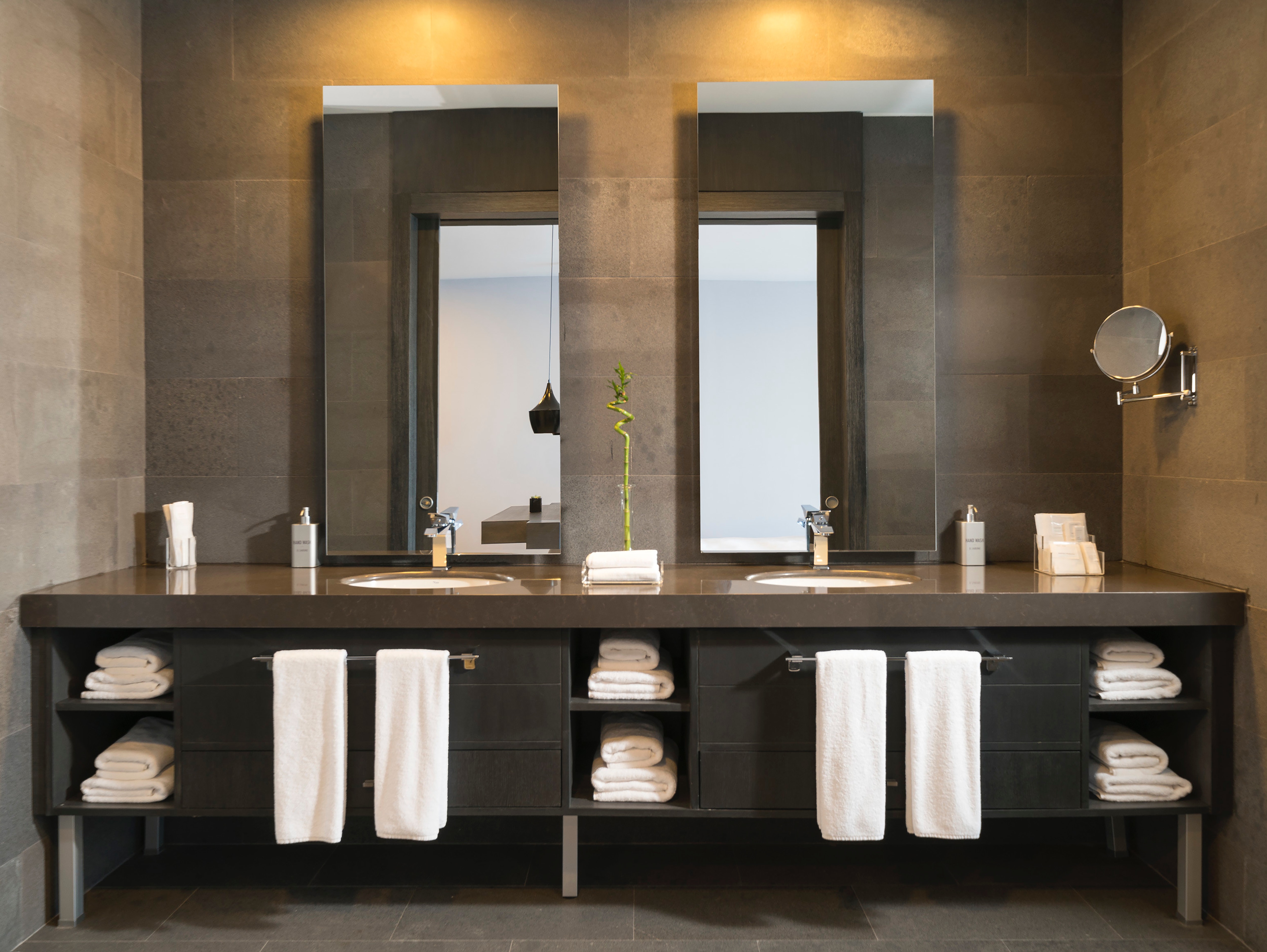
There’s a reason why there are “kitchen and bath” stores, and even design magazines devoted to these rooms. A well-staged kitchen and bathroom can make the entire home look better. So, it’s no surprise that professional home stagers pay particular attention to these spaces.
What do these pros have to say about bathrooms?
Professional stagers advise that you start by taking a picture of the room. Looking at that picture will give you a better sense of how others see your bathroom and reveal what needs to be changed.
Then, de-personalize it. When you’re showing your home to buyers, you want the bathroom to resemble a guest bathroom. So, no shaving kits, toothbrushes, sticky notes to self on the mirror, etc.
Stagers also recommend that anything worn be replaced. This will likely include the shower curtain and mats, which tend to wear and stain quickly.
Hang fresh new towels on the rack. (If you’re buying new towels for this purpose, choose white.) Put an unused bar of soap or hand cleaner next to the sink. Make it look like a freshly stocked hotel bathroom.
If required, paint the walls. Off-white colours, including beiges and light greys, work well.
As you can see, it doesn’t take much to stage your bathroom and make it look its best for buyers.
Looking for more staging tips? Call today.
Cutting Down the Time it Takes to Prepare your Home For Sale
Cutting Down the Time it Takes to Prepare your Home For Sale
If you’re thinking of listing your property, one thing that might be holding you back is concern about preparing your home for sale. You may be wondering how much work there will be. Is it going to take a couple of months? A couple of weeks? A few days?
That, of course, depends on the state of your property.
However, regardless of how close your home is to “show time” ready, there is plenty you can do to reduce how long that preparation takes. Consider these ideas:
• Sell stuff online. The less cluttered your home seems to buyers, the better it will show. So, make a list of items you want to sell, and then list them on one of the many local online market websites. Price items fairly and, chances are, you’ll get rid of everything in a day or two.
• Have a repair day. Go through your home and make a list of everything
that needs to be fixed. Then, schedule repair people to all come on the
same day. Voila! In one day, all needed repairs (or, at least, most of them)
are done.
• Get staging advice. Instead of guessing at what changes you need to make
around your home to make it look its best, get expert staging advice. You’ll
find out exactly what the experts suggest you do, and you’ll save a lot of
time and money. (By the way, I can provide you with that advice too.)
• Ask before making big improvements. Are you planning to convert a wood
burning fireplace into a gas unit to help sell your home? Before doing any
big improvements or renovations like that, talk to me. You don’t want to
spend thousands of dollars on an unnecessary project.
• Hire help. You don’t have to do everything on your own. Get the help you
need. For example, hire a painter, a cleaner, and/or a junk removal service.
Those will significantly shorten the time it takes to prepare your home for
sale and save you a lot of work. Also, the costs of those professionals may be off-set by the increase in the sale price of your home.
Bottomline: Preparing your home doesn’t need to be overwhelming and time consuming. Contact me for more ideas to help get your home ready for sale, quickly.
Is it Time to Re-Shingle Your Roof?
Is it Time to Re-Shingle Your Roof?
No matter what you think of snakes, you must agree that they have a unique way of dealing with worn-out skin. When the time comes, they simply shed it — like an old jacket — revealing a fresh new skin underneath.
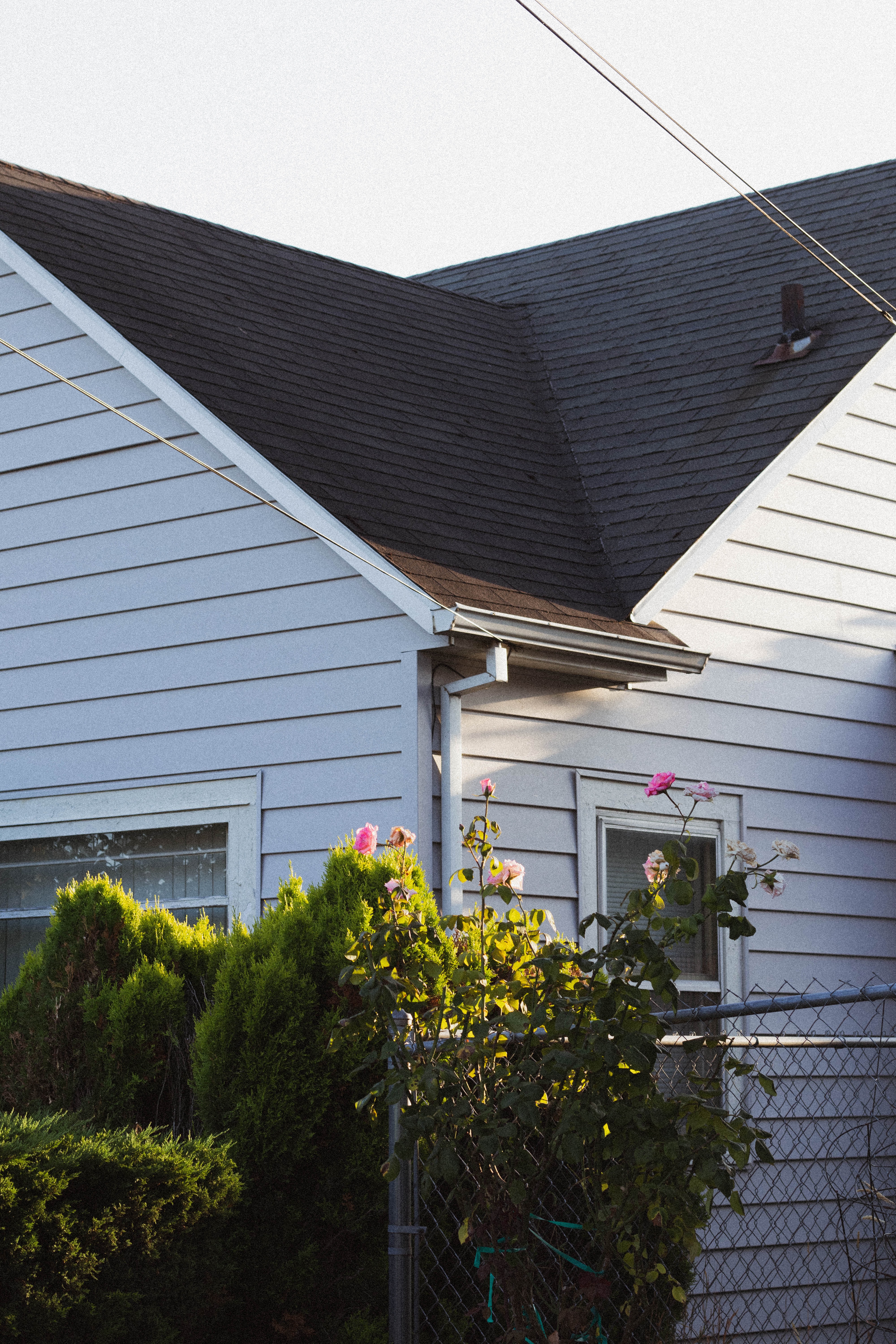
Your home’s roof doesn’t have that advantage! So, when the shingles wear out or become damaged, you need to have them replaced.
Unfortunately, it’s not always easy to determine whether your shingles need replacement right away, or whether you can hold off for another year. Assuming your home has the most common type of shingles — asphalt — here’s what to look for:
• Corners upturned on some shingles.
• Missing shingles.
• Shingles lifting during high winds and not settling back into place (flat) within a day or two.
• Heavy accumulation of shingle debris (particles) in the gutters.
• Shingle bits and pieces found on the ground around your home.
• Spots on your roof that still look wet a day or two after a rainfall. (This could be a sign of water infiltration into the felt or even the roof deck.)
If you have any of these signs, be sure to have a roofing contractor take a closer look.
Before investing in a new roof, be sure to check with the retailer or contractor who supplied the original materials. Your shingles might still be under warranty.
Bottomline: Don’t delay. You don’t want to wait until you hear drip drip drip before taking action!
Dealing with Stress when Selling Your Home
Dealing with Stress when Selling Your Home
Let’s face it. Planning events, even exciting ones like an overseas vacation, can be stressful. So, it’s not surprising that some homeowners — even those thrilled about moving — can slip into “worry mode” when putting their property up for sale. Unfortunately, this anxiety can make the process of selling an unpleasant experience. Who wants that? So here are some things you can do to reduce selling stress and enjoy the adventure.
Understand the selling process. The more you know about the steps involved in selling your home, the less mysterious — and, therefore, less stressful — it will be.
Give yourself the time you need. Feeling rushed and stressed comes from trying to do too much in too little time. Even if you’re selling quickly, it’s important to block off sufficient time in your calendar for the things you need to do.
Take care of yourself. As television psychologist Dr. Phil often points out, you can’t give what you don’t have. When it comes to selling your home, that means you need to eat well and stay healthy, so you have the energy you need throughout the process.
Make your home attractive to buyers. That not only means tidying up and doing a little home staging, it also means setting the right listing price. Nothing eliminates the stress of selling more than having flocks of qualified buyers interested in your home.
Get the help you need. You don’t have to do everything on your own. That’s why working with me is so advantageous. I take care of the many details for my clients so that they can enjoy the journey.
Sure, there are going to be a few stressful moments. However, the process of listing and selling your property, while looking for your next dream home, can be an exciting experience. Let me help you. Call today.
Getting a DIY Renovation Done On time and On Budget
Getting a DIY Renovation Done On time and On Budget
Two of the biggest stressors for DIYers are projects that cost too much or take too long. Unfortunately, there’s no sure way to guarantee that one or the other (or both) won’t happen. But there is a lot you can do to minimize the probability.
When budgeting, a big mistake DIYers make is not considering the little things. For example, you might budget for drywall panels but neglect to include the cost of nails, tape and plaster. It’s easy to overlook these small items thinking they won’t add up to much of an expense. But often they do. In fact, for many renovation projects, the little things account for up to 20% of the cost.
Another expense that is often overlooked is taxes. When you find a bathtub you like for $399, be sure to budget for what you’ll actually pay out-of-pocket. Also, don’t forget possible delivery expenses.
A budgeting tip many experts recommend is to price everything you need and then add 10%. That gives you a buffer.
Regarding scheduling, consider whether or not you’ve done this type of project before. If you’re laying hardwood floors for the first time, there’s a learning curve. You’ll likely take two or three times longer than you would if you were more experienced.
Even if you have experience with the type of project you’re undertaking, it’s human nature to underestimate how long it will take. So, if you feel confident you can install that sink in an hour, give yourself two.
A lot of this, of course, is common sense. But if you take a common sense — rather than an optimistic — approach to budgeting and scheduling, you’ll stand a much better chance of your DIY project going smoothly.
What if your Ideal Home Isn’t Available?
What if your Ideal Home Isn’t Available?
Imagine you’re looking for a new home. You have a list of all the features you want, just like you would have a grocery shopping list. However, when you explore the homes currently on the market, none meets all your criteria.
What do you do? You have a few good options.
First, you can take a second look at your list. Does your new home need every single feature on it? Are there one or two features you can do without? For example, can you settle for a smaller kitchen assuming the property has everything else you want?
Often, buying a home that’s close to perfect is perfect enough.
Second, consider what features you might be able to add to a home later, by way of a renovation or other improvement. If a property doesn’t have a finished basement, for example, you might be able to get that done down the road. Indeed, there are probably many features you can add later to an otherwise desirable property.
Finally, consider the current level of activity in the local real estate market. Is it likely that a lot of new homes will be coming on the market soon? If so, your perfect home may come up on the market within the next few weeks.
Maybe even tomorrow!
In that situation, make sure you arrange to get immediate alerts for newly listed homes that meet your criteria. You’ll want to jump on each new opportunity before other buyers learn of the listing.
The good news is, in most cases you should be able to find and buy a great home, with most — if not all — of the features you want.
Beyond Boxes: Packing Materials You May Need for your Move
Beyond Boxes: Packing Materials You May Need for your Move
As you can probably guess, when you’re preparing to move, you’ll need boxes and tape — and, perhaps some bubble-wrap or old newspapers to use as protective wrapping for delicate items.
But that may not be all you need. Take a look at this list and see if you’ll want any of these on hand while you’re packing or on moving day.
Colour markers for labelling boxes. (Tip: Colour coding boxes by room will make unpacking much easier.)
Stretch wrap to protect larger items that can’t fit into a box.
Small plastic bags to store dis-assembled parts, such as sofa legs, cabinet hardware, etc. (You don’t want to lose them!)
Moving blankets to protect floors.
A dolly or hand truck to move heavy items. (You can rent these.) Mattress moving bag. This helps prevent stains and tears during your move. You can also buy specialty bags for sofas and tables.
Reusable foam furniture sliders, to protect floors when furniture needs to be pushed into place.
Foam corner protectors. This prevents furniture with sharp corners from banging and damaging other items during a move.
Planning ahead and having the right packing materials on hand will make your move less stressful and, hopefully, damage-free!
6 Affordable Ways to Boost your Home’s Curb Appeal
6 Affordable Ways to Boost your Home’s Curb Appeal
When buyers come to see your home, the first thing they notice is how your property looks from the curb. That first impression is powerful and lingering. If buyers don’t like what they see, it can influence how they judge the rest of your property, regardless of how great it looks on the inside.
You definitely want to do whatever you can to boost curb appeal. Here are six affordable ideas to consider:
1. Drivewaysealing.Thismakesthepavementlookdarkerandless faded. It also helps cover up some of the cracks. Sealing won’t give you the “brand new” look of repaving, but it’s close — and significantly less expensive.
2. Exteriorwindowwashing.Washingthefrontwindowsmakesthem look clean and bright. In fact, the effect can be stunning. There are window washing products that connect to your hose to make this job easier. Check your home improvement retailer.
3. Maintainingshrubs,hedgesandflowerbeds.Trimmingthehedges, shrubs and other evergreens can make a big difference in how your property looks from the street. It’s like giving them all a haircut! Flowering plants can also brighten up the look.
4. Frontdoorpainting.Fromthecurb,abuyer’seyeisnaturallydrawn to your front door. If your entry system looks old and worn, consider a fresh coat of paint. It can make the entrance look almost new.
5. Garagedoorpainting.Thisisabiggerprojectthatcantakeadayor two, but the effort might be worth it. For many homes, the garage door is the biggest item in the curb appeal panorama. Making it look better will have a big impact.
6. Removingunsightlyitems.Lookatyourhomefromthestreet.Are there items in your field of vision that take away from the curb appeal? For example, are there garbage cans and other items stowed along the side of the property and visible from the road? If so, move them.
If you’re selling your home, making the best first impression is crucial. You don’t want buyers to drive by simply because they don’t like what they see from the outside. Use these tips to boost your home’s curb appeal.
Home sales decline despite increased demand
Home sales decline despite increased demand
The Metro Vancouver housing market experienced below average sales activity and moderate price declines in 2019.
The Real Estate Board of Greater Vancouver (REBGV) reports that sales of detached, attached and apartment homes reached 25,351 in 2019, a three per cent increase from the 24,619 sales recorded in 2018, and a 29.6 per cent decrease over the 35,993 residential sales in 2017.
Last year’s sales total was 20.3 per cent below the region’s 10-year sales average.
“We didn’t see typical seasonal patterns in 2019. Home buyer demand was quieter in the normally busy spring season and it picked up in the second half of the year,” Ashley Smith, REBGV president said. “In terms of home values, prices dipped between two and four per cent across the region last year depending on property type.”
Home listings on the Multiple Listing Service® (MLS®) in Metro Vancouver reached 51,918 in 2019. This is a 3.2 per cent decrease compared to the 53,614 homes listed in 2018 and a five per cent decrease compared to the 54,655 homes listed in 2017.Last year’s listings total was 7.6 per cent below the 10-year average.
“Home buyer confidence was a factor throughout the year. In the first quarter, many prospective buyers were in a holding pattern, waiting to see how prices would react to the mortgage stress test, new taxes, and other policy changes,” Smith said. “Confidence started to return in the summer, and we saw above average sales in the final quarter of 2019.”
The MLS® HPI composite benchmark price for all residential properties in Metro Vancouver ends the year at $1,001,000. This is a 3.1 per cent decrease compared to December 2018.
The benchmark price of apartments decreased 2.7 per cent in the region last year. Townhomes decreased 2.4 per cent and detached homes decreased four per cent.
December summary
REBGV reports that residential home sales in the region totalled 2,016 in December 2019, an 88.1 per cent increase from the 1,072 sales recorded in December 2018, and a 19.3 per cent decrease from the 2,498 homes sold in November 2019.
Last month’s sales were 9.5 per cent above the 10-year December sales average.
There were 1,588 detached, attached and apartment properties newly listed for sale on the MLS® in Metro Vancouver in December 2019. This represents a 12.9 per cent increase compared to the 1,407 homes listed in December 2018 and a 46.8 per cent decrease compared to November 2019 when 2,987 homes were listed.
The total number of homes currently listed for sale on the MLS® system in Metro Vancouver is 8,603, a 16.3 per cent decrease compared to December 2018 (10,275) and a 20.1 per cent decrease compared to November 2019 (10,770).
For all property types, the sales-to-active listings ratio for December 2019 is 23.4 per cent. By property type, the ratio is 15.2 per cent for detached homes, 25.7 per cent for townhomes, and 32.5 per cent for apartments.
Generally, analysts say that downward pressure on home prices occurs when the ratio dips below 12 per cent for a sustained period, while home prices often experience upward pressure when it surpasses 20 per cent over several months.
Sales of detached homes in December 2019 reached 599, a 72.1 per cent increase from the 348 detached sales recorded in December 2018. The benchmark price for detached properties is $1,423,500. This represents a four per cent decrease from December 2018, and a 0.6 per cent increase compared to November 2019.
Sales of apartment homes reached 1,053 in December 2019, a 96.8 per cent increase compared to the 535 sales in December 2018. The benchmark price of an apartment property is $656,700. This represents a 2.7 per cent decrease from December 2018, and a 0.8 per cent increase compared to November 2019.
Attached home sales in December 2019 totalled 364, a 92.6 per cent increase compared to the 189 sales in December 2018. The benchmark price of an attached home is $778,400. This represents a 2.4 per cent decrease from December 2018, and a 0.7 per cent increase compared to November 2019.
If you’d like to know more about how the market is affecting your chance to buy or sell, please feel free to call me, Claudio Tonella, and we can have a chat.
July Vancouver Real Estate Market Update video
The Real Estate Board of Greater Vancouver shared this video to update us on the state of the real estate market in Greater Vancouver in July. How did it perform in your area? Does this influence your buying or selling real estate? Give me a call if you have any questions.